
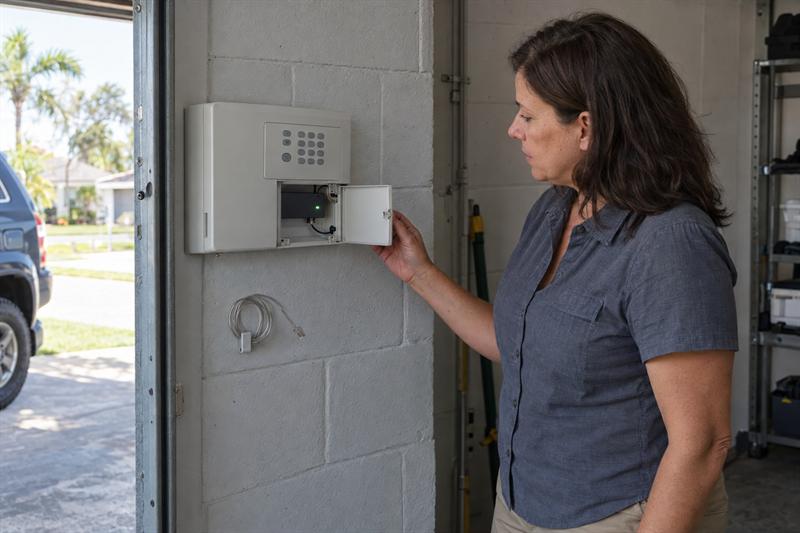
At Cross Security, Inc., this question usually comes up when someone has a working alarm system but is no longer confident in how it communicates. Often, the panel and sensors are still doing their job, but the signal path is the part starting to fall behind. That is where confusion begins, and it is also where unnecessary replacements can happen.
What’s the Difference Between Cellular and Landline Alarm Monitoring?
The difference is straightforward. Landline monitoring sends alarm signals through a traditional phone line, while cellular communicator security monitoring sends those signals over a cellular network to the monitoring center. The panel may stay the same, but the communication path changes.
That distinction matters because many people assume the entire alarm system has to be replaced when the real issue is only how the signal gets out. For a broader overview of how security monitoring works for homes and businesses, it helps to separate the monitoring method from the rest of the system.
How landline alarm monitoring works
Landline alarm monitoring uses a phone line to transmit signals from the alarm panel to the monitoring center. Many older home and business systems were built this way, and some are still operating on that same setup today.
When the line is stable and the system is in good shape, landline monitoring can still work well. The main limitation is that the phone line becomes a single point of dependence. If that line is interrupted, degraded, or only kept active for the alarm, the setup can become harder to justify over time.
- Uses a traditional phone line for signal transmission
- Common in older alarm systems
- Works best when the line is stable and still practical to maintain
- Can become less attractive when the phone line is the weak link
How cellular communicator security monitoring works
Cellular monitoring uses a communicator that sends alarm signals over a cellular network instead of a phone line. In many cases, this allows the panel and sensors to remain in place while the communication method is upgraded.
This is a common situation with existing systems in Tampa Bay. The hardware inside the property may still be usable, but the old communication path no longer makes as much sense. That can make it smarter to evaluate the communicator first instead of assuming the whole system has reached the end of the road.
- Sends alarm signals through a cellular network
- Does not rely on a traditional phone line
- Often works as an upgrade path for existing systems
- Can help modernize monitoring without automatically replacing everything
Cellular vs. Landline Alarm Monitoring at a Glance
If the goal is a practical answer, cellular monitoring is often the stronger option because it avoids phone-line dependence and better fits how many properties are monitored today. Landline monitoring still has a place in some legacy systems, but it is rarely the best long-term direction if the communication path is already showing its age.
- Reliability: Cellular is often the more practical fit when communication consistency matters most.
- Infrastructure risk: Landline depends on a physical phone line. Cellular avoids that specific point of failure.
- Compatibility: Either option depends on the panel and communicator being a workable match.
- Cost logic: Landline becomes harder to justify when the phone line exists mainly for alarm transmission.
- Typical use case: Cellular fits many modern upgrades. Landline fits a narrower set of stable legacy setups.
Reliability during outages and service disruptions
Communication reliability is where this decision becomes real. If an alarm system cannot send a signal consistently, the rest of the hardware matters less. This usually becomes more important when the property is unattended for long stretches, because no one is on site to notice a communication problem until it affects monitoring.
A common mistake is to focus on sensors, cameras, or app features and ignore the path carrying the alarm signal. That can leave a system looking current on the surface while still depending on an aging communication setup underneath.
Vulnerability to line cuts or infrastructure issues
Landline monitoring depends on a physical phone line, and that creates a specific weakness. If that line is interrupted, the alarm loses its normal communication path. Cellular monitoring removes that piece of infrastructure from the equation.
This is one of the clearest reasons cellular monitoring is often the better fit. It addresses a known weak point directly. If you are still relying on a phone line mainly because that is how the system was originally installed, the risk is usually in the path, not the panel.
Speed and consistency of alarm signal transmission
Speed and consistency matter because alarm monitoring only works when the signal gets through as expected. One common mistake is assuming every older setup performs the same just because the system still arms and disarms normally.
This is where signal quality and communicator compatibility start to matter. A system can appear functional day to day while still being behind where it should be on the monitoring side. That can lead to delayed decisions and more rushed upgrades later.
Equipment and installation considerations
Many readers come into this comparison assuming a monitoring change means a full system replacement. In practice, those are not always the same decision. The alarm panel, sensors, and keypad may still be fine, while the communicator is the part that needs to change.
This is one of the biggest misunderstandings Cross Security, Inc. runs into. People can replace more than they need to because no one explains the difference between the system and the communication path. If you are trying to evaluate existing system monitoring options, that distinction is the first thing to get clear.
Cost and long-term value
Monthly price is only part of the decision. The bigger question is whether the setup still makes sense over time. If a property is maintaining a traditional phone line mainly so the alarm can report, that added cost changes the equation quickly.
Another common issue is that the monitoring rate gets all the attention while the cost of supporting the old communication path gets ignored. That can leave a setup looking inexpensive on paper but no longer delivering the best value in practice.
When Landline Monitoring Still Makes Sense
Landline monitoring still makes sense when the system is stable, the phone line is already in place for other reasons, and the owner is not trying to stretch more life out of equipment that is already becoming harder to support. This is a narrower use case than it used to be, but it still exists.
It can also make sense as a short-term bridge when a system is functioning well and the owner wants to plan the right upgrade instead of rushing into the wrong one. What usually goes wrong is staying in that bridge stage too long. Once the communication path becomes the weak point, the whole setup can become harder to rely on confidently.
When Cellular Monitoring Is Usually the Better Fit
Cellular monitoring is usually the better fit when the goal is dependable communication without relying on a traditional phone line. That makes it a practical choice for many upgrades, unattended properties, and systems that still have usable equipment but outdated reporting methods.
This applies to both home monitoring and business monitoring. If the property needs a cleaner, more current communication path, cellular is usually the right direction. It is especially practical when the owner wants to modernize without assuming a full replacement is required.
Need a clearer read on whether your current setup is already showing its limits? These are signs that usually mean the communication path deserves a closer look:
- You are keeping a phone line active mainly so the alarm can communicate
- Your system still works, but no one has reviewed the communicator or panel compatibility in years
- You are switching providers and being told everything has to be replaced without a clear system evaluation
- Your property is empty for long periods and communication reliability matters more than ever
When those signs are in place, the communication path usually needs to be reviewed, upgraded, or replaced.
Can You Keep Your Existing Alarm System and Upgrade the Monitoring Path?
Yes, in many cases you can keep the existing alarm system and upgrade only the monitoring path. This is one of the most important distinctions in the entire comparison. The system inside the property and the way it communicates are related, but they are not automatically the same problem.
At Cross Security, Inc., this is often where the best value is found. Many customers assume they have to start over because the monitoring method is outdated. In reality, the panel and sensors may still have useful life left if the right communicator or takeover option is available.
What a system takeover means
A system takeover means an existing alarm system is evaluated to see whether it can be monitored under a new provider instead of being replaced completely. The goal is to keep what still works and change only what needs to change.
This matters because many systems are more reusable than people think. The problem is that takeover is not always explained clearly by companies focused on selling standard packages. If the hardware is compatible and the system is in good condition, replacing everything can add cost without solving a different problem.
When a communicator upgrade is enough
Sometimes the communicator is the only part that needs to change. That means the sensors, keypad, and panel remain in place while the reporting path is updated from landline to cellular.
This is where smart upgrades happen. Instead of treating the whole system as outdated, the evaluation focuses on the part that actually limits monitoring performance. For readers comparing parts of a system, home security system components explained can help clarify what each piece does and which piece is really driving the decision.
When panel age or condition changes the answer
Not every older system is worth preserving. Some panels are too outdated, too limited, or too difficult to support for a simple communicator upgrade to make sense. This is where problems can get worse when owners keep forcing more life out of hardware that has already become the bottleneck.
The key is not to assume old means unusable or that old means acceptable. The condition of the panel, the compatibility of the communicator, and the long-term support picture all shape the answer. If those do not line up, a bigger upgrade is usually the cleaner move.
How Homeowners and Business Owners Should Think About the Choice
Homeowners and business owners often start with the same question but end up needing different answers. The hardware may look similar, yet the way the property is used changes what matters most.
Considerations for home monitoring
For homeowners, the big issues are usually whether the current system can stay in place, whether a phone line is being maintained just for alarm reporting, and whether the system remains dependable when no one is home. Those are practical concerns, not technical details for their own sake.
If the home system still works but the communication path is lagging behind, cellular is usually the stronger fit. That is especially true when the owner wants better reliability without replacing equipment that is still doing its job.
Considerations for business monitoring
For businesses, the decision usually becomes more important after hours. Multiple entry points, varied occupancy, and longer periods with no one on site raise the importance of dependable signal transmission.
This is where communication weaknesses can become more costly. A business can have a solid physical setup, but if the reporting path is outdated, the gap shows up where it matters most. The same thinking applies to other business protection decisions, including security camera placement for small businesses and offices, where the layout only helps if the coverage strategy matches the way the property is actually used.
Questions to Ask Before Choosing a Monitoring Option
- Is the current panel compatible with a cellular communicator?
- Is a traditional phone line being kept active mainly for alarm monitoring?
- How old is the panel, and is it still practical to support?
- Is the property usually occupied, or does it sit empty for long periods?
- Would a system takeover avoid replacing hardware that still works?
- Is the communication path the real problem, even if the system still seems functional?
If your answers point back to an aging communication method, that usually means the path needs to be addressed before the rest of the system becomes part of the problem.
Key Takeaways
- Landline and cellular monitoring differ mainly in how alarm signals reach the monitoring center.
- Cellular is usually the more practical option when communication reliability is the priority.
- Landline still fits some stable legacy setups, but it is a narrower long-term choice.
- A working alarm system does not always need full replacement. Sometimes the communicator is the real issue.
- System takeover and communicator upgrades are often overlooked, and that leads people to replace more than necessary.
Conclusion: Choose the Monitoring Path That Fits the Property, Risk, and System
The real problem is not simply using older equipment. The real problem is relying on a communication path that no longer fits the property or the way it needs to be protected. When that goes unaddressed, people can keep paying for outdated infrastructure, miss the chance to preserve usable equipment, or end up replacing everything in a hurry after the weak point becomes too obvious to ignore.
Cross Security, Inc. is a practical next step when you need a clear answer instead of a one-size-fits-all sales pitch. As this comparison shows, many systems still have useful life, but the communicator or reporting path is what needs attention. If that sounds familiar, it makes sense to have Cross Security, Inc. evaluate whether a communicator upgrade, system takeover, or a larger change is the cleanest solution.
How Cross Security, Inc. Approaches This Decision
Cross Security, Inc. approaches this by looking at the actual weak point first. If the panel and sensors still make sense, the focus stays on whether the communication path can be updated without forcing an unnecessary replacement.
That matters because a common pattern in this market is package-first selling. Customers can be pushed toward a full swap before anyone has clearly separated the condition of the system from the condition of the communicator. Cross Security, Inc. approaches it differently because existing-system support is part of the decision process, not an afterthought.
If the system is still worth keeping, the goal is to preserve that value. If the panel is too old or too limited, the recommendation becomes clearer and more direct. Either way, the decision is based on what the property actually needs, not on selling more hardware than the situation calls for.
FAQ Block
Is cellular alarm monitoring better than landline monitoring?
In many cases, yes. Cellular alarm monitoring is usually the better fit because it removes dependence on a traditional phone line and better matches how many properties are monitored today. The main distinction is not that cellular sounds newer. It is that the communication path is often cleaner and more practical for long-term use, especially when the phone line exists mainly to support the alarm.
Landline monitoring still makes sense in some stable legacy setups, but that is a narrower situation. If the system works and the line is already justified for other reasons, landline can still be serviceable. If the line is the weak point, the setup usually stops being a good long-term choice even if the rest of the system still functions.
Can an existing alarm system be upgraded to cellular monitoring?
Yes, many existing alarm systems can be upgraded to cellular monitoring without replacing the entire system. In those cases, the communicator is what changes, not necessarily the panel, keypad, or sensors.
This is one of the most important distinctions in the decision. A lot of people assume outdated monitoring means outdated equipment across the board. In reality, a working system may only need a better reporting path. What changes the answer is the panel’s compatibility and overall condition, not the fact that the system is older by itself.
Do you need internet for cellular communicator security monitoring?
No. Cellular communicator security monitoring uses a cellular network, not a traditional phone line. It is a separate communication path from standard landline-based reporting.
The confusion usually comes from lumping internet, wireless, and cellular into the same category. They are not the same thing. The useful distinction here is that moving away from a landline does not automatically mean replacing the whole setup with something completely different. In many cases, it means changing how the signal leaves the panel.
Is landline alarm monitoring outdated?
It is older technology, but older does not automatically mean unusable. Some landline-monitored systems are still working acceptably, especially when the setup is stable and the property is not being forced to rely on a weak communication path.
What usually gets misunderstood is that “outdated” should be judged by function, supportability, and practicality, not just age. If the phone line is now the least dependable part of the setup or exists only because the alarm still needs it, that is usually the point where the older method stops making sense.
Can switching monitoring companies require replacing the whole alarm system?
Sometimes, but not always. A system takeover or communicator upgrade is often enough when the existing hardware is still compatible and in good condition.
The key distinction is between changing providers and changing equipment. Those decisions overlap, but they are not automatically the same. This is why some people end up replacing more than necessary. If the panel is still workable, the real change may be on the monitoring side rather than the hardware side.
How do homeowners and business owners choose the right monitoring option?
They usually get to the right answer by looking at how the property is used, not just what equipment is already there. Homeowners tend to focus on whether they can keep an existing system and stop relying on a dedicated phone line. Business owners usually need to think harder about after-hours protection, multiple entry points, and long stretches with no one on site.
That difference matters because the same panel can lead to two different decisions. A home may only need a communicator upgrade to stay practical. A business with more exposure after hours may need a stronger communication setup sooner because the consequences of a weak path can show up faster when the building is empty.
Recent Comments