
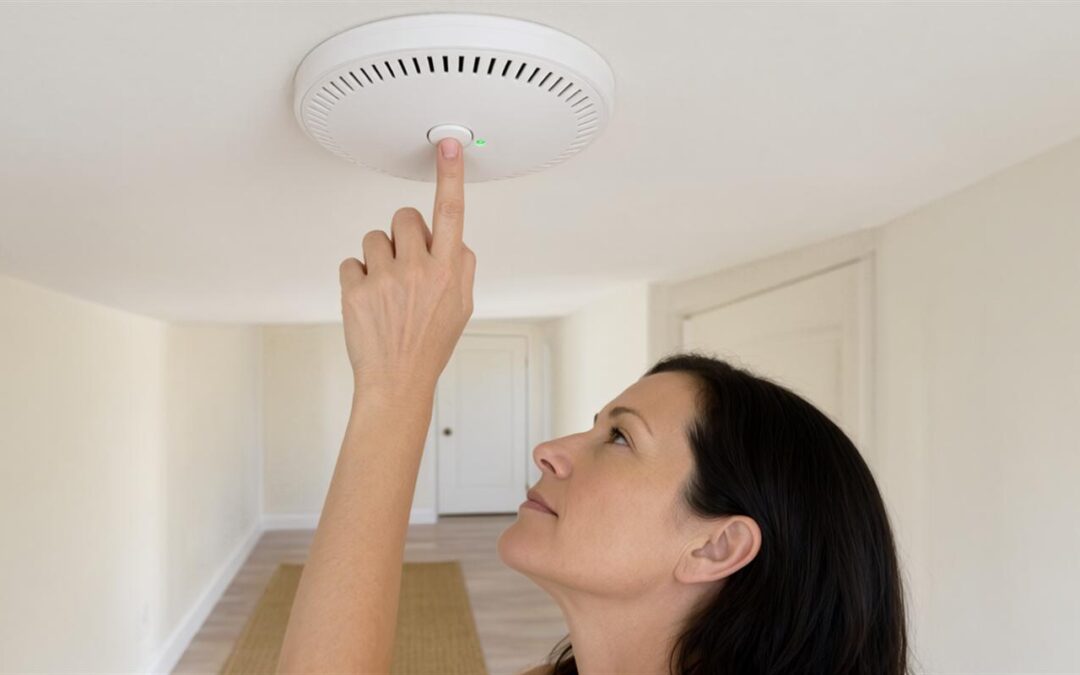
Most homes in Clearwater and Tampa Bay already have a smoke alarm somewhere in a hallway, and the question is usually whether it is a monitored smoke detector or a device that only sounds inside the house. The monitored version is wired or programmed into an alarm panel, so the smoke it senses can also produce a signal that leaves the house and reaches a monitoring center. What follows is how monitored fire protection works alongside an alarm system, what changes when a detector is connected to one, and what to check before adding detection to an existing setup.
What Monitoring Adds to a Smoke Detector
A smoke detector has one core job: notice smoke and sound an alarm loud enough to alert the people inside. Whether a signal also leaves the property is a separate question, and it comes down to what the device is connected to. A battery-powered alarm in a hallway does the first part well and has no path to the second. To add monitoring, the detector has to be connected to an alarm panel that communicates with the monitoring company. This is where the term “monitored” becomes important. It does not refer to the device itself, but rather the connection that allows the signal to leave the home and be received by the monitoring center.
The existing alarm panel is the part that decides whether any of this is possible. If the panel has never been connected to a monitoring service, it may need an upgrade or a modification before fire devices can report through it. The panel must be able to recognize and transmit fire signals, which are typically handled differently than intrusion signals. That is why the capabilities of the existing system are worth confirming before anything is added. The device on the ceiling matters less than the connection behind it.
What a Monitored Smoke Detector Actually Does
The route a smoke signal takes is easy to follow once it is laid out in order. First, the detector senses smoke nearby. It then sends a signal to the alarm panel, which processes the input as a report on a specific zone. The panel, in turn, uses its communicator to transmit that signal to the monitoring center. The communicator can use a standard phone line, a cellular network, or a combination with smartphone control and home automation features. This transmission is what differentiates a monitored device from a standalone one.
The monitoring center receives the signal and checks it against the account information. This includes the contacts listed, the zone labels assigned, and the instructions set for handling fire events. The same panel that handles burglary signals also processes fire signals, which is why one account can reasonably cover both intrusion and fire devices. What matters at that point is the record behind the signal: a smoke zone labeled “upstairs hallway” tells an operator something that a zone labeled “zone 4” does not.
How Smoke Detection Connects to an Alarm System
Smoke detectors can be connected to an alarm system in two primary ways: hardwired or wireless. Hardwired detectors are linked to the panel through a wiring loop that runs throughout the home and returns to the panel. Wireless detectors, on the other hand, communicate with the panel via radio signals. Either method requires the panel to be programmed to recognize the detector and assign it to a specific zone. That programming is what lets the monitoring center know exactly which part of the home the alert came from.
The panel and its communicator are the two parts that make fire monitoring possible, and both have to be compatible with the smoke devices on the system. A panel that reads a device correctly but cannot pass the signal along leaves the house in the same position as a standalone alarm. It is worth mapping the components that make up a monitored alarm system before anything is added, because fire devices depend on the panel and communicator already in place.
Alarm Systems and Fire Signals: Why the Two Are Handled Differently
A fire signal and a burglary signal both originate from the same alarm panel, but they are treated differently by the monitoring center. This is because fire signals are considered life-safety events and are typically prioritized. The monitoring center will follow the specific instructions assigned to the fire zone, which may include contacting emergency services immediately. Burglary signals, on the other hand, may go through a verification process before dispatching help, depending on the account settings.
The way the monitoring center processes each signal depends on the contacts and zone labels associated with the account. That is why the setup of the monitoring account matters more than the brand of the detector. The panel’s programming deserves the same look before another device is added. The path from the panel to an operator’s screen, and the call that may follow, is set out in how security monitoring handles an alert after detection.
Standard Alarm Versus Monitored Smoke Detection
Whether the system is monitored or not, the smoke detector itself works the same way. It still sounds a local alarm, alerting anyone inside the home to the presence of smoke, and that local warning is the part that reaches people in the building first. What monitoring adds sits on top of it.
What a monitored smoke detector adds is a route off the property. The panel now has somewhere to send the report and an account record to attach it to, and four things change in the minutes after the alarm sounds.
- The signal leaves the property and arrives at a monitoring center, rather than stopping at the siren.
- The monitoring center records the event as part of the account.
- The device is labeled with a specific location through the panel’s zone configuration.
- The contact path for fire alerts does not rely on someone being present at the home.
What to Check Before Adding Monitored Detection to an Existing System
If you are considering adding monitored detection to your existing alarm system, there are several things to verify. The checks are about compatibility: whether the panel can accept a fire device at all, and whether the monitoring account carries the information an operator would need to act on the signal. The condition of the current setup is worth knowing before any change is agreed.
- Check whether the existing smoke devices are connected to the panel or if they are standalone units.
- Confirm that the panel has a spare or existing zone designated for fire devices.
- Look at the manufacture date on the detector label and follow the replacement guidance from its manufacturer.
- Verify that the panel’s communicator is active and identify which communication path it uses.
- Review the contacts and zone labels that the monitoring account will carry for fire events.
An older panel usually raises a second set of questions about equipment ownership, installer codes, and account numbers, and the checks recommended before keeping an existing alarm system cover those before a monitoring change is agreed.
Where Monitored Detection Still Has Limits
Monitoring changes what happens after an alarm, not how the detector behaves from day to day. Cooking smoke and steam from a shower can trigger nuisance alarms, and placement does much of the work in cutting them: a detector sitting beside a stove or next to a bathroom door will pick up steam long before it senses anything worth reporting. Device type matters as well, and the manufacturer’s guidance for a given model is the place to check which conditions it is designed to tolerate.
Detectors also need regular testing and eventual replacement. A test is usually reported to the monitoring company first, so the signal is not read as a real event. Monitoring reports a fire; it does not put one out, and it does not replace an escape plan that everyone in the house has practiced. Those limits are worth knowing in advance, because they shape which devices go where rather than whether monitoring is worth having.
Key Takeaways
Four points worth carrying out of the sections above:
- A monitored device sends a signal off the property, which a standalone alarm cannot do.
- The alarm panel must be programmed to recognize and transmit fire signals correctly.
- Fire signals are handled separately from intrusion signals, with their own contact paths and account instructions.
- Placement and device choice do most of the work in cutting nuisance alarms.
Conclusion: Getting Monitored Fire Protection Right
Cross Security, Inc. is a family owned and operated alarm and monitoring company based in Clearwater, Florida, serving Clearwater and the Tampa Bay area for over 40 years. The company offers monitoring services without a long-term contract and can support existing alarm systems, including those installed by other companies. Whether the property sits in Clearwater, Tampa, St. Petersburg, Largo, Seminole, Palm Harbor, Tarpon Springs, New Port Richey, Oldsmar, Dunedin, or elsewhere in Pinellas County, fire devices are handled on the same monitoring account as the security system, with no separate monitoring charge for the smoke detection. The monitoring and fire protection services offered in Clearwater set out the signal paths and what each one covers.
Recent Comments